
Voyageiro
Travel with passion
AMSTERDAM
The city of tulips and dancing houses along the canal belt
What is in this post?
Location Information

 9°C
9°C
Country
Language
Currency
Distance to capital
Inhabitants nickname
Timezone
The Netherlands
Dutch
Euro [€]
-
Mokumer
Winter : UTC + 1
Summer : UTC + 2
Introduction to the city of tulips and dancing houses along the canal belt
Amsterdam is one of the most vibrant European capitals with a unique blend of historic charm and modern energy. It is known as the tulip city and it also a masterpiece of urban planning built upon a network of waterways. Explore the picturesque and iconic canal belt (Grachtengordel), which is classified as a UNESCO World Heritage site. Along these canals, you'll discover the famous dancing houses. Read more details of these houses below in this post. The presence of the Amstel river and the expansive IJ water basin together mark the heart of this city's unique and charming geography. Amsterdam is a city that always attracted people with an artistic, cultural and open-minded spirit. It is truly waiting to be explored, promising you an unforgettable experience. With all the information of this post, you are prepared to discover the city of tulips and dancing houses along the canal belt.
The Dam as the heart of the city
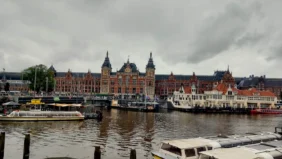
The Dam at the royal palace is the heart of the city of Amsterdam. At this moment it is the most important and central square of the city. In the 13th century, there would be placed a dam with locks on this place. Amsterdam has its name from this dam placed at the end of the Amstel river, close to the place where the river flows in the IJ. However the history of the first settlements and drainage ditches goes further back in time. First settlement at these location dates already from around 4600 years ago, while the first drainage ditches from the year 1000. Now you find the royal palace at the Dam in the city centre. It is a must do to visit this palace located on this historic location of Amsterdam.
The unique canal belt as urban expansion
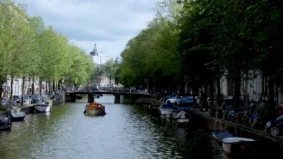
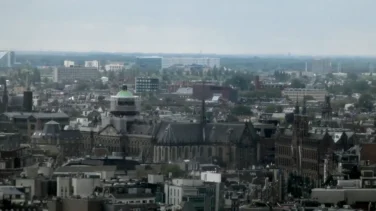
In the 17th century, Amsterdam needed to expand the city. To make this urban expansion possible, the unique canal belt was excavated by thousands of people. These many canals are Singel, Herengracht, Keizersgracht and Prinsengracht. You find wonderful typical Dutch houses along these many canals. In addition to the urban expansion, these canal belt served also for water management. Today, the canal belt of Amsterdam is classified as UNESCO World Heritage. Amsterdam still has a big issue with sufficient affordable housing. This is why many people live on a boat on the water of the canals. These is much cheaper than buying a house in the city centre of Amsterdam.
Dancing houses along the canal belt
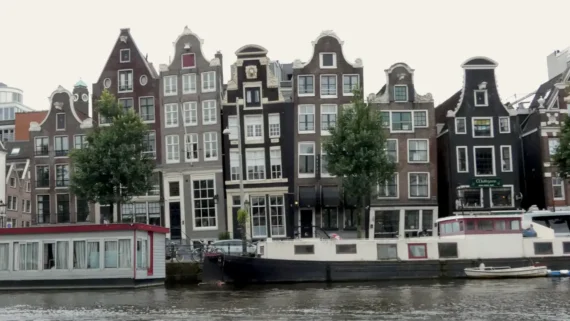
The ground around the canals is marshy and has a very wet subsoil. So the houses along the canals had to be built o stilts. Over time, many of these houses began to subside, causing them to lean in all directions. Some stand more to the front, while other to the right or left. The houses keep each other upright, because they lean against each other. This is why the houses along the canals are called the dancing houses. Mostly it is only the ground floor and first floor that is no longer straight, while they drew the level from the first or second floor.
Amsterdam and its tulips
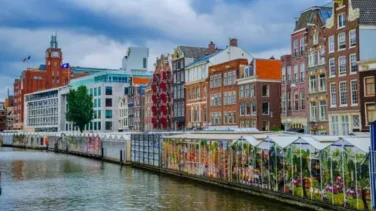
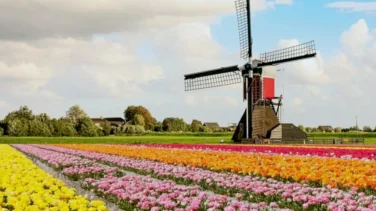
While the canals with the many dancing houses steal the spotlight of Amsterdam, there is also a famous flower in this city. When you visit Amsterdam in spring, it's also an extra unique experience to celebrate the magnificent tulip. Already from the 17th century is the tulip the national icon of Amsterdam. The city transforms from mid-March to mid-May into a colourful beauty through this vibrant flower. With the Amsterdam Tulip Festival in April as the absolute highlight. At that moment, you can spot beautiful planted decorations across many public areas like the Museum Square. Or have a breathtaking experience by making a day trip striped fields just outside the city. For example the world-renowned Keukenhof Gardens are an absolute must to experience a unique colour palette of Amsterdam's tulips. At the Singel, between the Koningsplein and Muntplein, you can visit the historic permanent flower market with unique floating stalls. This is huge tourist attraction, ideal to stroll and a really must do when you visit Amsterdam.
What is the origin of Mokumers as the nickname of the Amsterdam locals?
In short, Mokumer, or in plural Mokumers, comes from the word Mokum. Mokum is Hebrew for location or city. The word Mokum in the Netherlands, has its origin from Jiddisch. This is a West Germanic language of Dutch-Jews with German influences. Around 3 million of Jews over the world speak Jiddisch.
Jiddisch city names
In the past, in Jiddisch, cities were mostly called with the first letter from the Hebrew alphabet. So, Amsterdam became Mokum Allef - or City A in English, Rotterdam Mokum Reisj - City R and so on. Only for Amsterdam, the name Mokum stayed. Still today, Dutch locals call the inhabitants of Amsterdam Mokumers. This is Dutch for someone who lives in Mokum, the city or in this case Amsterdam.
What is the link with Jews and Amsterdam?
In the Middle Ages and the next centuries, south Europe became more and more Catholic. The Jews couldn't stay there any longer. So, a lot of Jews from South European countries like Spain and Portugal fled to the Northern part of Europe. They arrived in cities like Amsterdam, Rotterdam and Bruges and many other cities in Western Europe. This is because in the 17th century, Amsterdam and Bruges where one of the most important places to be in Europe to trade. Due to WWII, also Jews couldn't live any more in Germany, The Netherlands and Belgium. They had to flee again to other places in the world, most of them fled to America. Many millions others were murdered by the Holocaust. Like Anne Frank and her family. This is why you can visit the poignant Anne Frank House and some other monuments in memoriam for the many people who lost their lives due to these horrific historical facts.
What are popular must-do highlights in Amsterdam?
Amsterdam has many famous monuments and museums to visit as well as things to do. Some of the absolute must-do's in Amsterdam that many travel guides and websites highlight are the Royal Palace, the Anne Frank House, the Rijksmuseum, the Red Light district and making a boat trip through the city. To help you plan an unforgettable trip to Amsterdam, Voyageiro shares his Top 5 Must-Do Highlights in Amsterdam.
Be sure to add also these essential experiences to your Amsterdam travel bucket list!
Stroll through the streets
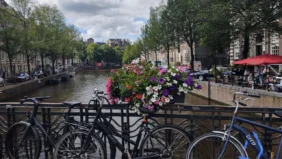
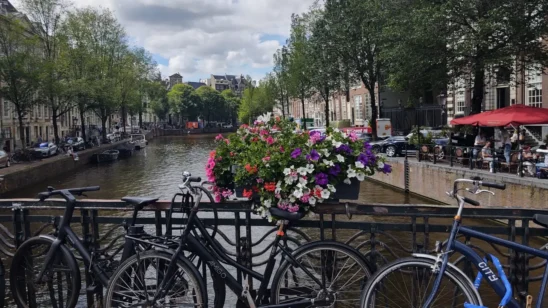
As told above, the Grachtengordel around the central part of the city centre is an absolute must-do. Strolling through the many streets along the canals and admire the typical Dutch houses. Cross the canals over the many picturesque bridges with wonderful flowers. From these bridges you have an even better view over the canals and the dancing houses.
A boat trip
Another nice way to discover the canals and the Grachtengordel of Amsterdam is by making a guided boat trip. This is a great way to see the city centre of Amsterdam from the water and get a lot of information about the city, its history and the wonderful monuments and buildings.
De 9 Straatjes
Central in the Grachtengordel of Amsterdam you'll find the 9 Straatjes, The Nine Streets.This is a grid of small picturesque streets with many local traders. It is the place where you'll discover a delightful mix of independent boutiques, vintage stores and shops selling typical local products from cheese to handcrafted items. As well as cosy cafes to grab a coffee and soaking the typical atmosphere. For travellers who are looking for unique finds away from the tourist shops, the Nine Streets is a mandatory place to spend an afternoon.
A city of Painters
Amsterdam is also a city of painters with international fame. The most famous painters are dominated by the masters of the Dutch Golden Age of the 17th century. It also is the home of many famous masters from more recent periods in history.
Rembrandt and Vermeer
Rembrandt the most important painter of Dutch history
The most important masters of the Dutch history is the painter Rembrandt van Rijn from the 17th history. Rembrandt is famous for its masterpiece The Night Watch or in Dutch Nachtwacht. You can admire this impressive painting in the Rijksmuseum. Visit his home and studio, which is now the Rembrandt House Museum and an absolute must-do in Amsterdam. In his studio, you learn how coloured paint was made in the 17th century.
Rembrandt the most important painter of Dutch history
Another important painter of the 17th century is Johannes Vermeer. His typical use of light, shadow and colour sets him apart. Especially the brilliant use of the colours blue and yellow. He is world-famous for the portrait Girl with a Pearl Earring (Meisje met de parel) and The Milkmaid (Het Melkmeisje). This is an oil-on-canvas painting you can also admire in the Rijksmuseum. An international famous brand has the rights to use Vermeer's painting of Het Melkmeisje for its products.
Vincent van Gogh
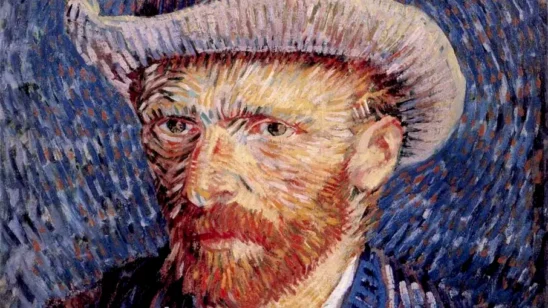
Vincent van Gogh is one of the most famous painters globally. Although he was not born or based in Amsterdam. He was born in Zundert and died in France. The city of Amsterdam is essential to its legacy. The Van Gogh Museum in Amsterdam holds the world's largest collection of Van Gogh's paintings and drawings. Here you find his famous painting of the sunflowers and the whole story of his life. The Van Gogh Museum is an absolute must-do in Amsterdam when you are interested in art. This is a very popular museum. So, you have to buy your tickets in advance at a specific time slot when you want to visit the museum with the largest Van Gogh collection.
The Albert Cuypmarkt is the place to be to get a typical local vibe on a street market. It is the largest street market of the Netherlands. You find this market in the vibrant De Pijp district. This market hosts over 260 stalls six days a week and offers a folksy atmosphere of the multi-cultural Amsterdam life. They sell everything from fresh products, clothing exotic spices, souvenirs and typical products of the Netherlands. This is the ideal place to enjoy the typical Dutch street food, like Hollandse maatjes, herring or a croquette on a slice of bread. Or enter a local pub to enjoy the traditional Dutch vibe. It is also the cradle of one of the most famous Dutch singers André Hazes. You can find his statue in the middle of the Albert Cuypmarkt. A visit to the Albert Cuypmarkt is a chaotic, lively and essential local experience.
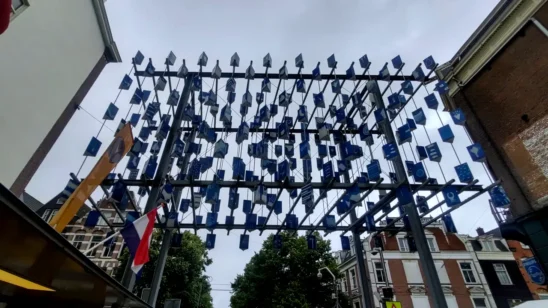
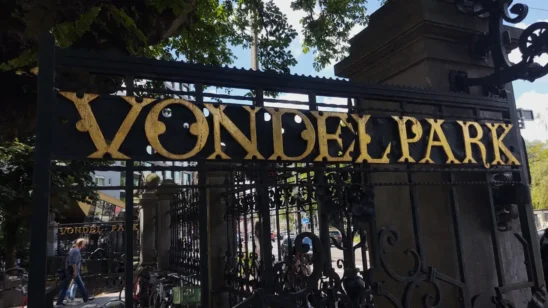
The Vondelpark is a 47-hectare green area in the city centre of Amsterdam. It is the most famous city park of the Netherlands. This green oasis opened in 1865 and was named after the 17th century Dutch poet Joost van den Vondel. Since 1996, this park is classified as a national monument.
Detox from the city's hustle
This park is the ideal place in Amsterdam to disconnect from the city crowd, or a great detox from the city's hustle. It is a green oasis where locals, tourists and other visitors come together to jog, cycle, enjoy a picnic or relax by the peaceful ponds. The park comes alive during the summer months with the many cultural events at the Open Air Theatre.
A really must-do in Amsterdam is tasting the local Stroopwafel. This syrup waffle is the most famous cookie of the Netherlands. Two paper-thin and buttery wafers are sandwiched together with a layer of caramel syrup, which is called stroop in Dutch. It is something typical from Holland, a region in the Netherlands where Amsterdam is part of.

Find the local Stroopwafel
You can find this famous syrup waffle almost everywhere in the city of Amsterdam. So, it is important to find a true local spot to taste the real authentic Stroopwafel. Some great places to taste this famous waffle are at the Albert Cuypmarkt or some tiny shops in the city centre of Amsterdam. Here they make your Stroopwafel fresh and warm right before your eyes. Don't miss this experience to make your Amsterdam trip complete.
Hidden Gems
Like in any city, Amsterdam also has some hidden gems to discover:
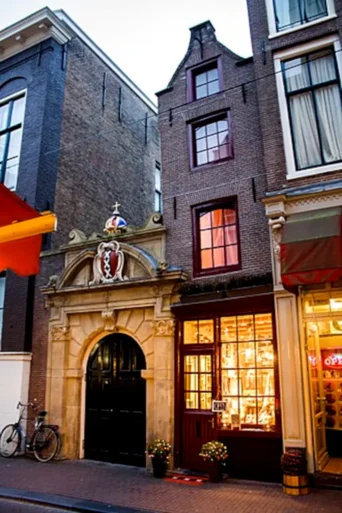
- The Amsterdam Tulip Museum is another great place to discover the history of the city of the Tulips. It is not only a touristy display of flowers. This museum brings you also back to the 17th century, when tulips were worth more than houses.
- The smallest house, or in Dutch Het Kleinste Huis, is located on the Oude Hoogstraat. This is a 2 metre wide house and was built in the 18th century. At the main floor, you find a cosy café. It is nestled between two larger houses.
- The next hidden gem stays in the theme of small and narrow places to discover. In the heart of the Red Light District, you find one of the narrowest streets in Europe. The name of this street is Trompettersteeg. It is such narrow alley that even Google Maps sometimes makes a mistake while pointing you to this spot.
- Amsterdam had a lot of hidden Catholic Attic Churches. These churches were a result after the Great Iconoclasm (Dutch: Beeldenstorm) of 1566. There was a ban on "publicly showing that you were Catholic". So, many people started a hidden church. One of the best-preserved hidden attic churches is the Ons' Lieve Heer op Solder. This hidden gem is absolutely worth your visit to learn a lot of the history of the lower countries after the Middle Ages.
Annual calendar of festivals and events in Amsterdam
Yearly festivals and events to mark in your calendar
What are the famous events in Amsterdam? Are there regional festivities in Amsterdam? What are the huge Amsterdam's city festivals to join every year? Are there festivities you don't may miss in Amsterdam?
You will find some of the famous yearly activities to do in Amsterdam below. Very important to plan your trip. Regardless of whether you want to join them or avoid them.
National Tulip Day
Each year, the Tulip season runs from the 2nd part of March till mid-May. While the official kick off is already half of January. They hand out free tulips for visitors at the Museumplein. So, this is the place to be to celebrate the official start of the Tulip season.
King's Day
The birthday of the Dutch Monarch is a national holiday in the Netherlands. It is only on the birthday of the direct heir of the throne, not of the partner. So when the Dutch Monarch is female, this holiday is known as Queen's Day. The day also changes when there is a new Dutch Monarch. On this day, there are many parades everywhere through the Netherlands to celebrate the King or Queen.
Tulip Festival
Amsterdam is known as the city of tulips. So, there absolutely has to be a huge tulip festival during the yearly season. It starts with huge parades through the city. While during the season, visitors can enjoy millions of blooming tulips in the tulip fields outside the city centre. Keukenhof is top spot to discover. There you can see the most famous and most popular tulip fields. Don't miss this, book your guided tours to discover these unique locations with impressive picking gardens.
Amsterdam Open Air
During the first weekend of June, the Amsterdam Open Air city festival brings many typical local art together. In the Gaasperpark, you can enjoy Amsterdam's music, fashion and different art scenes. It is the ideal moment to discover new artists, great music, fashion and art. Because, beside the tulips and dancing houses, Amsterdam is also a hotspot for artists.
Amsterdam Pride
July is the month of the Amsterdam Pride. Throughout the whole month of July, you see many rainbow flags everywhere in the city. The highlight is the closing event with the world famous Canal Parade through the city centre of Amsterdam. This closing event takes place at the end of July or at the beginning of August. There also are many street festivities, cultural activities and conferences.
TCS Amsterdam Marathon
Sports enthusiasts have to tie their cords in the second half of October. Because, that is the moment of yearly TCS Amsterdam Marathon. Run through the city centre and along many iconic places of Amsterdam. But you have to buy your tickets as fast as possible. Because, the full and half marathon are sold out very quickly. Find out more about these uniqe marathon on their homepage: TCS Amsterdam Marathon.
Amsterdam Dance Event (ADE)
During the Amsterdam Dance Event (ADE) in October, the city of Amsterdam transforms into the place to be for people who love dance and electronic music. More than 2500 artists bring the best of themselves on many locations through the city. This event is mostly at the end of October for 5 days.
Light Festival
November - January
At the end of year, it is time for the city's light festival. Every year, from the end of November till half January, the city centre of Amsterdam transforms in a huge artistic light spectacle. During this international light art festival, you can enjoy 20 light artworks at many wonderful places through the city centre. They have every year a different theme. You can enjoy this festival by walking, cycling or by boat trip. Learn more about this international famous festival on there website: Amsterdam Light Festival.


